Substance Tutorial Models
For the winter semester of 2021 I had the honour of teaching part of a university course on environment design as a tutor / TA. The idea of the lessons was to show everyone a quick overview of the workflow between Blender, Substance Designer / Painter and Unreal. My goal was to enable the others to be able to create their own models and textures, so that they could create more individual and personalised environments than just by using tools like Megascans. What you can see here are two examples of some of the models / materials I created for the lessons.
The first is a model of a street corner building, which uses a single trim sheet for all of it's textures. The example is perhaps a bit extreme, but I wanted to clearly demonstrate the potential savings over using individual textures for every small detail.
The second example is a sculpt of an owl statue, which I used to show the complete process for indivual custom assets. It was sculpted and retopoligised in Blender, then baked and textured in Substance Painter, and finally loaded into Unreal, including using a custom ORM material template for saving on texture count.
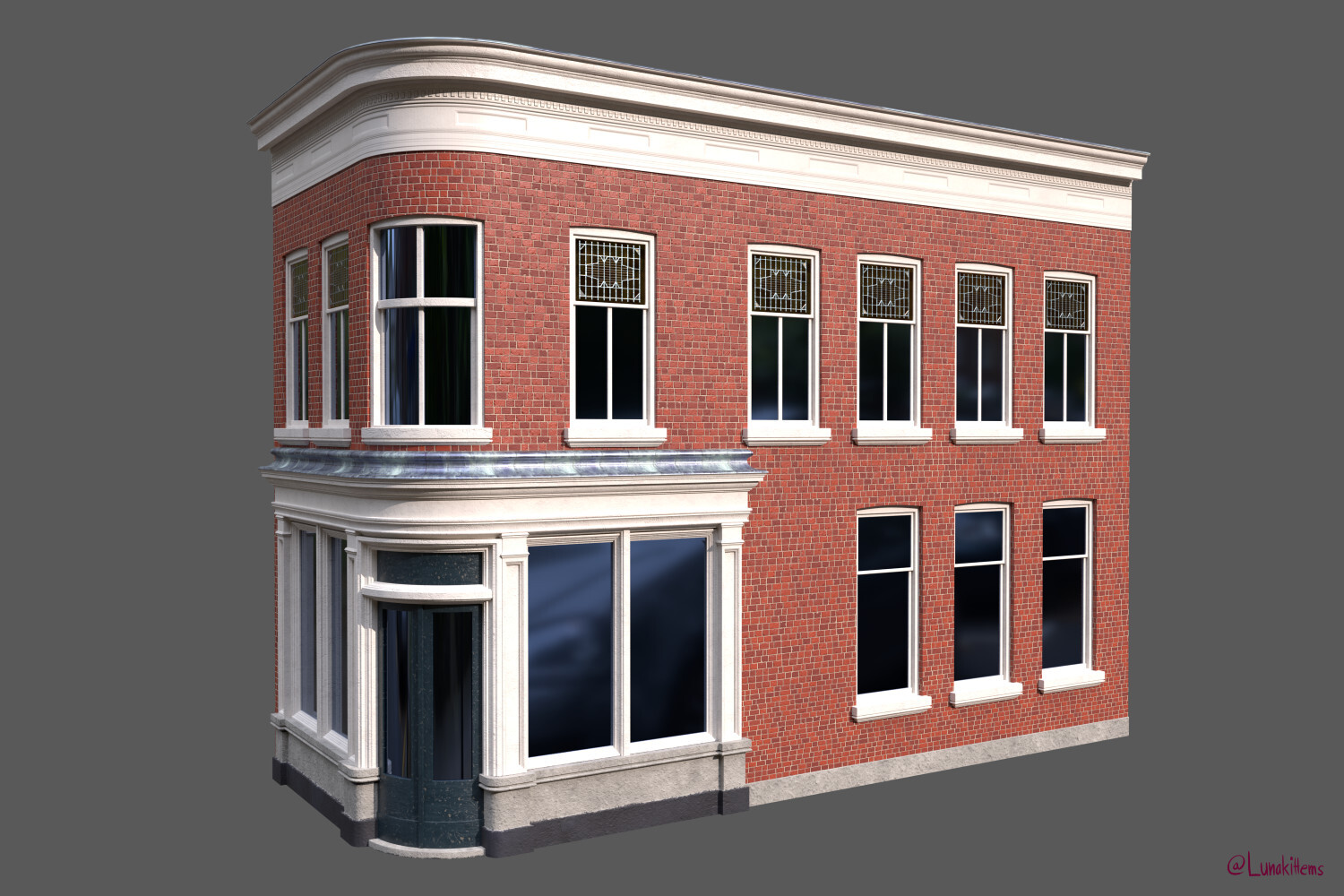
The reference for this house was a random street corner in the Netherlands, which I found on Google Streetview.


For certain parts of the building using a whole row of the sheet felt like a waste, so everything is combined into a single row.


The model has about 66,500 Tris. The relatively high polycount allowed for a slightly simpler trim sheet, since there isn't as much need for complex normals.


The model uses a single 2k material for everything.


For quick material IDs I like to just colour the materials instead of relying on object IDs for baking.

The low-poly mesh could probably still be simplified a little bit. To save time I used a mixture of manual and automatic methods in the retopology.